
7.5 KiB
title, source, author, published, created, description, tags
| title | source | author | published | created | description | tags | ||
|---|---|---|---|---|---|---|---|---|
| How the UK is becoming a ‘third-world’ economy | https://medium.com/the-geopolitical-economist/how-the-uk-is-becoming-a-third-world-economy-8fbdfdb412ea |
|
2024-10-13 | 2024-10-29 | The United Kingdom, which at its peak was an empire where the sun never set, ruled around 25% of the world and colonised the wealthiest countries of that time, is now slowly moving towards economic… |
|
Wealth and Decline — The UK’s Struggle Behind the Glitter
[

[

Image from HM Land Registry
The United Kingdom, which at its peak was an empire where the sun never set, ruled around 25% of the world and colonised the wealthiest countries of that time, is now slowly moving towards economic decline.
London, which is considered as the “City of Dreams,” is one of the wealthiest urban areas globally.
Its economy, worth around £508 billion ($652 billion), would rank as the 22nd largest economy worldwide.
If London was an independent state, placing it above nations like Argentina and Sweden.
Despite this, London’s prosperity is atypical for the rest of the United Kingdom. This small area of Southeast England, home to about one-third of the country’s population, generates nearly half of its GDP.
Without London’s output, British living standards would fall by 14%, barely staying ahead of Mississippi, the poorest state in the U.S.
However, the U.K. has seen better days. The last decade has been particularly tough, with real disposable income (income after taxes and benefits) still needing to grow.
As the cost of goods and services increases, the average Briton can buy less today than they could ten years ago.
Meanwhile, productivity remains low, among the weakest of any major economy, and housing has become unaffordable, contributing to the U.K. holding the record for the highest number of homeless people in the developed world.
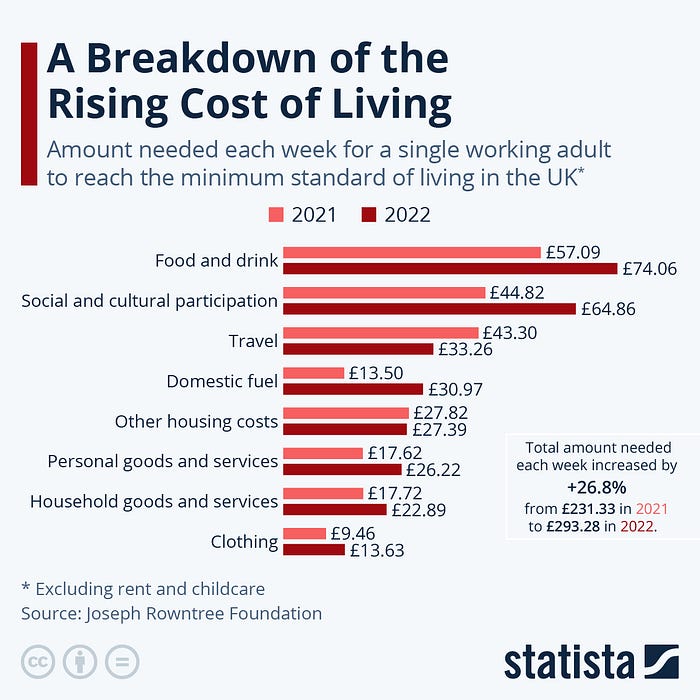
Image source: Statista
A History of Economic Setbacks
The roots of these issues lie in past political decisions. Over the years, Britain has stumbled through a series of crises and has yet to have a quick fix in sight. Ironically, the U.K., once the world’s first industrialised nation, now faces the risk of becoming the first to deindustrialise. Britain’s economy is on a downward trajectory, with rising inflation and housing prices.
Housing prices reportedly jumped by more than 20 to 25% in just one month, although this shocking statistic received minimal media attention.
Ground News offers invaluable insights, allowing users to view the full spectrum of media coverage.
For example, only ten sources covered the housing price spike, and less than 10% of these outlets were government sources, highlighting how governments often avoid discussing domestic complications.
The Cost of Austerity
Britain’s economic struggles date back to 2008 when the global financial crisis left long-lasting effects. Like many countries, the U.K. suffered, but its response set it apart. After borrowing roughly £141 billion to bail out its banks, the government opted for austerity rather than investing in fiscal and social policies. There were no significant tax cuts, minimum wage increases, inflation controls, housing assistance, or job creation programs.
For ordinary citizens, the consequences were devastating. Real household income fell and remained stagnant for the next 15 years, a period often referred to as Britain’s “lost decade.”
In 2007, the average British household was only 8% less prosperous than those in Norway and 6% behind the United States.
Here is the difference
Today, British households lag 20% behind Norway and 16% behind the U.S. in terms of real income.
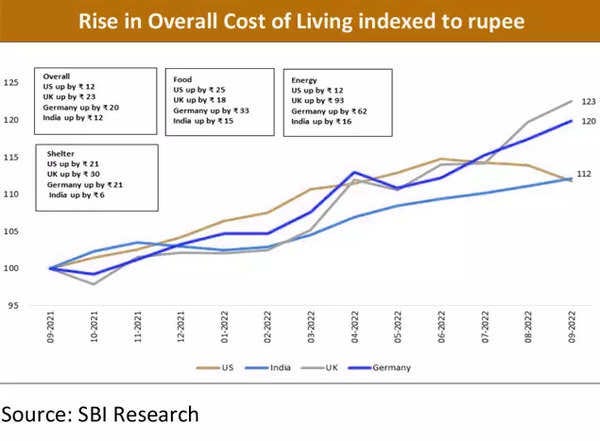
This decline in living standards is keenly felt by the middle class, whose real household income is a key driver of economic growth.
While the government prioritised corporate interests, even the corporate world saw only short-term gains. Productivity, one of the most efficient ways to grow an economy, should have been addressed. Productivity is not about working harder but about increasing economic output without increasing labour.
However, after the 2008 crisis, the U.K.’s productivity stagnated, bucking a trend that had been in motion since the 1980s.
Brexit, COVID-19, and the Ukraine War
The simultaneous effects of low household income and poor productivity explain much about the U.K.’s economic decline. Yet, this slow deterioration went largely unacknowledged by political parties, with no discourse to address it. Instead, the crisis manifested itself in the form of Brexit, which only worsened the economic situation.
Between 2016 and 2021, Brexit caused a 25% drop in direct foreign investment, according to the Bank of England.
Then came the COVID-19 pandemic, exacerbating the brewing crisis. The government borrowed an additional £280 billion to manage the pandemic, with interest rates at historic lows of around 0.1%. This seemed manageable at the time, but the Ukraine war in 2022 added a new layer of complexity. Sanctions on Russian oil and gas caused an energy crisis, tripling household heating costs. The government stepped in again, this time with £60 billion to £100 billion in financial support, pushing the national debt even higher.
Today, debt servicing has surged to £100 billion annually, a £60 billion increase from previous years. This expense has become the second-largest item in the national budget, surpassed only by health spending. Other public services have suffered, with such a large portion of funds going towards debt repayment.
As the pandemic subsided, most advanced economies saw a recovery in their workforces.
But not the U.K. Its workforce never bounced back, with a missing 11 million people classified as “economically inactive.”
This includes students, early retirees, and those with caring responsibilities. To fill the gaps, the government has turned to immigration, leading to an influx of workers from South Asia and Sub-Saharan Africa.
While this helps sustain the economy, it has also increased social tensions. In August 2024, anti-immigration protests rocked over 20 towns across the U.K., reflecting the simmering discontent within the nation.
A Bleak but Not Hopeless Future
Britain’s economic woes have triggered a chain reaction of crises, from debt to workforce issues, from housing to social tensions.
Yet, every nation goes through ups and downs, and the U.K. is no exception. London remains one of the wealthiest and most innovative cities globally, a glimmer of hope amid the challenges.
==Things may eventually improve, but for now, Britain must navigate the consequences of its past decisions.==