
4.8 KiB
title, source, author, published, created, description, tags
| title | source | author | published | created | description | tags | ||
|---|---|---|---|---|---|---|---|---|
| 1 key food your brain MUST have to stay sharp: Harvard expert | https://medium.com/famously-healthy/1-key-food-your-brain-must-have-to-stay-sharp-harvard-expert-d56b4bd5d503 |
|
2024-10-03 | 2024-10-29 | There are more than a few “brain foods” that experts will tell you to focus on to live a long, lucid life. I find it stinky, texturally unappealing (think scallops and lobster), and I mostly dislike… |
|
[

[

There are more than a few “brain foods” that experts will tell you to focus on to live a long, lucid life.
We’re talking antioxidant-rich fruit, fiber-packed leafy greens, and lean proteins.
My personal favorite is blueberries, or ‘brain berries’ as I’ve come to know them.
But is there one uber-powerful brain food to rule them all?
According to one Harvard nutritionist, there is.
And, unfortunately, I struggle to get enough of it.
I bet you do too.

What’s the №1 food to protect your brain? Read on. (Licensed by the author under the Unsplash+ License)
What we need (and I don’t get enough of)
I’m sorry, but I absolutely hate seafood.
Where do you stand on it?
I find it stinky, texturally unappealing (think scallops and lobster), and I mostly dislike the taste.
The problem is that seafood is about as good as it gets as a source of omega-3s, which according to Harvard nutritionist Uma Naidoo, is the most important food you can eat to support healthy brain function.
Here’s what she wrote for CNBC recently:
“While supplements can help provide these nutrients, I always tell people to first go to real foods, especially for fatty acids like omega-3s.
“When you eat a whole food you get additional vitamins, minerals, healthy fats, and protein.
“It’s a good foundation upon which to build a healthy eating plan.
==“Omega-3s are found in wild-caught fatty fish like anchovies, sardines, and salmon.==
“Wild Sockeye salmon in particular contains levels of EPA and DHA that are beneficial to our brain’s health.
“An average salmon filet in the U.S. is about three to four ounces and the suggested amount to eat per week is about eight.
“So one should try to get omega-3-rich fish onto your plate at least twice a week.”
So what’s the solution if, like me, seafood kinda grosses you out?
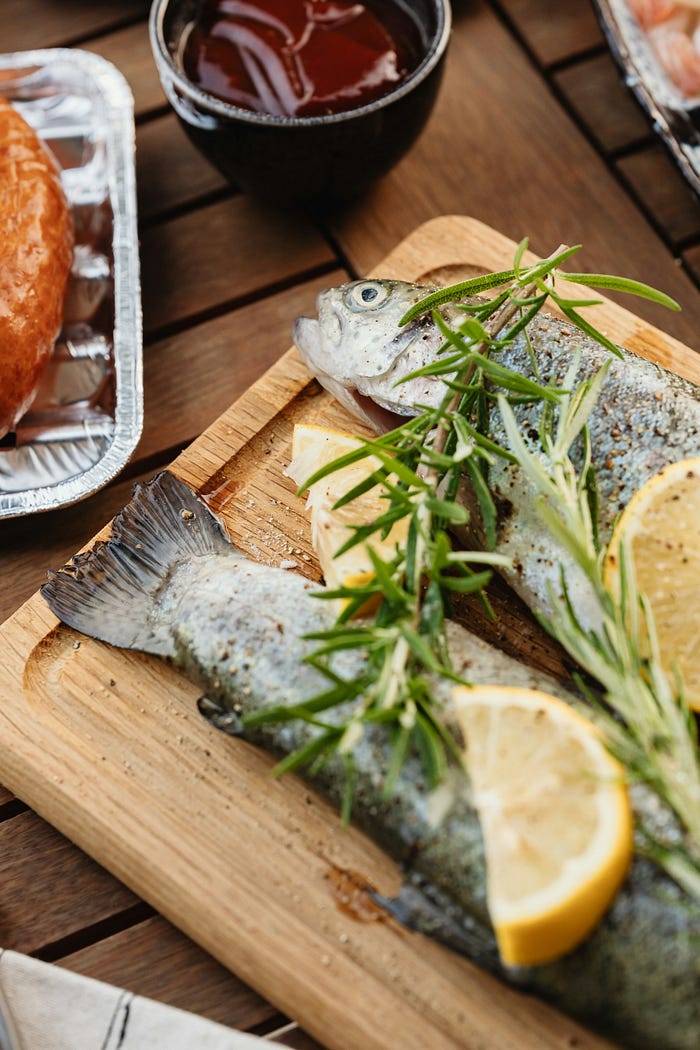
Fish? It’s a no from me. (Licensed by the author under the Unsplash+ License)
Why not supplements?
Fish oil supplements have come under a lot of scrutiny, and one worrisome study recently suggested you might want to avoid them altogether if you’re over 40.
The good news is that there are some great plant-based sources of omega-3s.
As Naidoo notes:
“If you are like me and don’t eat seafood (I was raised vegetarian), you may be relieved to know it is still possible to get adequate omega-3s from plant-based sources, including…
- Chia seeds
- Sesame seeds
- Walnuts
- Flax seeds
“About one ounce of chia seeds is more than your daily recommended intake of omega-3 fatty acids and delivers about 5,000 mg.
“If you eat eggs, aim for the pasture-raised kind. Be sure to add turmeric with a pinch of black pepper to optimize the impact for brain health.”
I could be better at this.
I do have a bunch of chia seeds in my freezer and it’s the easiest thing to throw into a smoothie.
I’ve also experimented with throwing walnuts into those smoothies as well, though I find the bitter aftertaste kind of shines through.