
112 lines
5.2 KiB
Markdown
112 lines
5.2 KiB
Markdown
---
|
||
title: "4 Paradoxes That Will Expand Your Thinking"
|
||
source: "https://medium.com/illumination/4-paradoxes-that-will-expand-your-thinking-7cce081bb766"
|
||
author:
|
||
- "[[Elias Bsaibes]]"
|
||
published: 2024-09-06
|
||
created: 2024-10-29
|
||
description: "Explore 4 mind-bending paradoxes that challenge your understanding of truth, identity, and omnipotence. Expand your thinking with these philosophical dilemmas."
|
||
tags:
|
||
- "clippings"
|
||
---
|
||
## PHILOSOPHY | SELF-IMPROVEMENT
|
||
|
||
## Challenge your mind
|
||
|
||
[
|
||
|
||

|
||
|
||
](https://medium.com/@eliasbsaibes?source=post_page---byline--7cce081bb766--------------------------------)
|
||
|
||
[
|
||
|
||

|
||
|
||
](https://medium.com/illumination?source=post_page---byline--7cce081bb766--------------------------------)
|
||
|
||
|
||
|
||
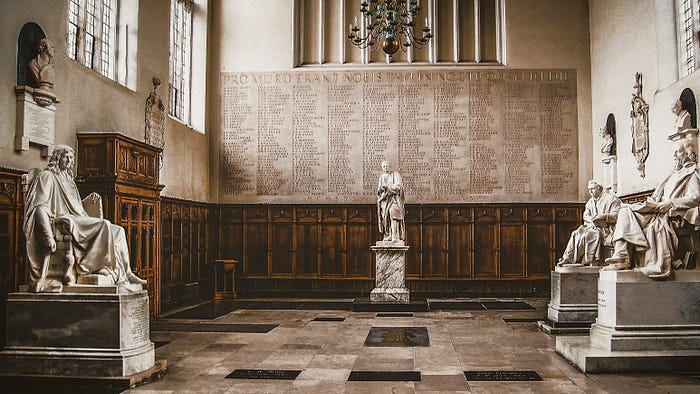
Photo by [K. Mitch Hodge](https://unsplash.com/@kmitchhodge?utm_source=medium&utm_medium=referral) on [Unsplash](https://unsplash.com/?utm_source=medium&utm_medium=referral)
|
||
|
||
==Our minds crave familiarity, and as we all know, too much familiarity is bad and leads to complacency.==
|
||
|
||
It’s important to challenge the rational mind every now and then.
|
||
|
||
That’s why today we’re going to dive into 4 paradoxes that will probably make you scratch your head. (The last one will change your perspective on **God**.)
|
||
|
||
## 1\. The Liar Paradox
|
||
|
||
Let’s look at the following sentence:
|
||
*“****This sentence is false.”***
|
||
|
||
Is it true? If you say yes then the liar sentence is true but it says that it’s false. Therefore it must be false but you said it is true.
|
||
|
||
If you say it’s false, then the sentence should be true because it says that it is false, but then that means that is also false.
|
||
|
||
You see where it goes.
|
||
|
||
The paradox here is that the sentence is true and false at the same time.
|
||
|
||
However, nothing can be false and true at the same time.
|
||
|
||
This paradox was invented by the philosopher ***Eubulides of Miletus***, who was famous for his paradoxes, in the 4th century BC.
|
||
|
||
## 2\. The Ship of Theseus Paradox
|
||
|
||
For this one, we need a little bit of context.
|
||
|
||
***Theseus*** was a young prince of Athens in Ancient Greece, who wanted to prove his worthiness of succeeding to the throne. To prove it, he decided to embark on a ship towards Crete where the Minotaur, a mythological creature, held Athenian kids and fought it.
|
||
|
||
He succeeded at rescuing the seven boys and seven girls and killed the Minotaur. Upon his return to Athens, he was welcomed with praise and recognition.
|
||
|
||
The Athenians decided to keep the boat that ***Theseus*** used as a national treasure for hundreds of years. However, as the boat became old, its worn-out components had to be replaced with new ones.
|
||
|
||
Over time, every part of the ship was gradually replaced.
|
||
|
||
That’s when the philosophical dilemma arises: “**Is it still the same boat?**”
|
||
|
||
Can it still be called ***Theseus’s ship***?
|
||
|
||
If not, then at what point did it stop being?
|
||
|
||
This paradox was created by the Greek philosopher and historian **Plutarch**, and questions the nature of identity and challenges our understanding of what makes something the “same” over time.
|
||
|
||
## 3\. The Barber Paradox
|
||
|
||
In a certain town with only one barber, the law says:
|
||
|
||
> 1.“The barber shaves all those men who live in the town who do not shave themselves, and only those men.”
|
||
> 2.” All inhabitants must be shaved.”
|
||
|
||
But the question is “Does the barber shave himself?”
|
||
|
||
If the barber shaves himself, then he must stop because the law says that he shouldn’t shave someone who shaves himself.
|
||
|
||
However, the law also states he must shave himself because the barber needs to shave everyone in the town who doesn’t shave himself.
|
||
|
||
This paradox, introduced by **Bertrand Russel**, leads to a logical contradiction.
|
||
|
||
## 4\. The Omnipotence Paradox
|
||
|
||
Imagine for a second an omnipotent being, for example, a God.
|
||
|
||
He can do everything because he has infinite power, right?
|
||
|
||
Well, the question arises: **“Can an omnipotent being create a stone so heavy that even it cannot lift it?”**
|
||
|
||
**If the being can create a stone so heavy that it can’t lift**, then it can’t do anything — namely, lift the stone, which implies that the being is not omnipotent.
|
||
|
||
**If the being can’t create such a stone,** then there’s something else it can’t do — create a stone so heavy that it can’t lift, which also suggests that the being is not omnipotent.
|
||
|
||
This paradox, often associated with medieval theologian Thomas Aquinas, concludes that true omni potency is impossible or logically incoherent.
|
||
|
||
***That’s all for today!***
|
||
|
||
These paradoxes invite us to rethink our concepts of truth and existence. Let them inspire deeper reflection and curiosity.
|
||
|
||
🌟**Want to dive deeper into the process of self-discovery and personal growth? Get** [**my free self-reflection guide here.**](https://eliasbsaibes.ck.page/c6c48752e6)
|
||
|
||
💜[**Join my Discord server**](https://discord.gg/bjfMBxk5UM) to explore meaningful discussions on philosophy and self-improvement. Share your insights, ask questions, and grow with a like-minded community!
|
||
|
||
***Thank you for reading!*** |